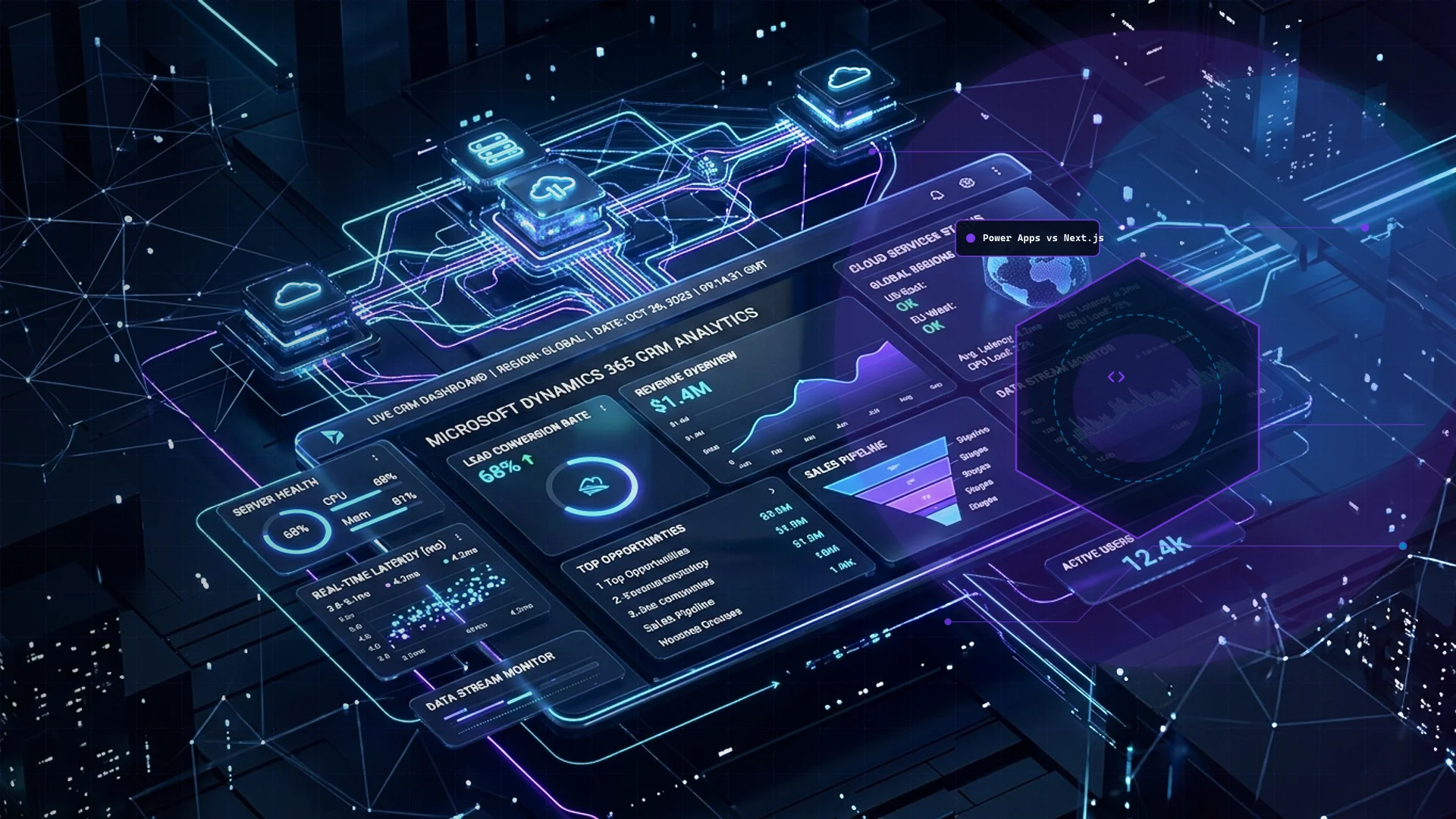


Modern enterprise sales cycles demand unified telemetry across ERP, CRM, and customer engagement touchpoints. When scaling Microsoft Dynamics 365 to handle millions of records and concurrent transactional events, traditional point-to-point integrations inevitably suffer from sync latency, lock contention, and API quota bottlenecks.
The Common Pitfalls in High-Throughput CRM Implementations
- Synchronous Plugin Overload: Running complex business logic inside synchronous execution pipelines can stall user sessions and cause database timeouts during peak hours.
- Direct Point-to-Point Syncing: Directly connecting billing engines or ERP systems to Dynamics Dataverse via REST calls without queue buffering leads to cascading failures during service disruptions.
- Neglecting Data Lifecycle & Indexing: Failing to create targeted alternate keys and indexing on high-query custom entities causes search degradation.
The Asynchronous Event-Driven Architecture
At Kexlin, our architecture teams leverage Azure Service Bus and Azure Event Grid to decouple external integrations from the core Dataverse transactional pipeline. Inbound events from e-commerce, POS, or ERP systems are pushed into durable FIFO message queues, allowing Dynamics 365 webhook listeners or Azure Functions to ingest records at controlled ingestion rates.
Furthermore, utilizing the Power Platform CLI and automated CI/CD pipelines ensures that configuration changes and custom PCF controls are deployed with zero downtime across Dev, UAT, and Production environments.